


The Death of Llywelyn ap Gruffydd 1282.
Posting dated 7 - 12 - 2006.

Antur Ysbryd Cofiwn: gethin.apgruffydd@ntlworld.com


2007 will mark the 725th anniversary of the death of Llywelyn ap Gruffydd, 'Tywysog Cymru' on the 11 Rhagfyr 1282 (also 25th anniversary of the great Cofiwn Commemoration at Cilmeri and in Builth Wells to mark 700th anniversary in 1982). This commemoration will be appropriate occaision for us to reconsider the English version of events of 10 - 11 - 12 Rhagfyr 1282, an English version accepted by our own post Tudor ''WASP'' and later ''Colonial Crachach'' establishment and whom have chosen to perpetuate. The question begging to be asked is do patriots go on believing this ''BIG LIE'' (even fostered by nationalists, as example of Gareth ap Sion's article in Cambria magazine 'The Hollow of Thorns') or do we get to grips with a new historic reality as put forward by Anthony Edwards. I dare say for those ''Patriotic Peripherals'' who have over the years viewd an annual bout of Pint Pot Patriotism at Tafarn Llywelyn more reason for annual reunion than any pupose that might be in persuence of the Ethos of Cilmeri, then indeed the following might prove a problem for fear it tears them away from their pre Xmas booze up. However, those of more serious patriotic purpose may consider intently the below and discuss as what then serves our chief patriotic purpose best?
 Pic (c) G.ap Gruffydd. Shows a pre hi tech A4 size promo poster in the days of using a Gestetner Duplicator. The illustration shows Llywelyn ap Gruffydd fighting off those who are unfortunatly seeking to kill him, considering this was produced many moons back it was perceptive of us to show Llywelyn in an ''heroic death''. This is how he would more likly have died with the 18 of his bodyguard at Aberedw and not ''scurrying about in the bushes at Cefn y Bedd'' and made to appear a frightened rabbit, to be ''accidently'' lanced in the back. Which version do you find more patriotically appealing, yes of course the Aberedw version and not the Cefn y Bedd version which is commemorated by the ''Rock of Cilmeri'' (Set up in 1956, 50 years ago this year and did that get a mention in the media?, I did inform them). Of course what patriots preferr and what is historical truth are often two different things, after reading the account of the last three days of Llywelyn ap Gruffydd by Anthonu Edwards I am in no doubt as to which version I believe. YES OF COURSE IT HAS GOT TO BE THE ABEREDW VERSION.
 Pic: (c) G. ap Gruffydd. shows sign at entrance to St Cewydd Church at Aberedw, just beyound the entrance is a Yew Tree. I suggest that you leave your flower and Ivy tributes to memory of Llywelyn III and the 18 of his bodyguard here on occaision of your visiting the remains of the Castle of Aberedw close by. Please note regards 2007 Commemoration that Antur Ysbryd Cofiwn will be holding Commemoration at Aberedw on the Saturday and at Parc ar Irfon, Cilmeri and Abaty Cwm Hir on the Sunday. Further details will hence be posted on the COFIWN ARCHIVE BLOG now up on the web and after Xmas in further development.
LLYWELYN II or LLYWELYN III ?

First an explanation of my use of Llywelyn III rather than Llywelyn II, to start with it is fair to draw to your attention that Anthony Edwards and one or two other Pobl Gwynedd have commented on this adversally. However, there is good patriotic purpose and educational reason to my using Llywelyn III and they are as follows (Please note this is not my original initiative but that of another who I will fully credit in time elsewhere):

1: Why use the English Regnal List counting system, which numbers their monarchy from time of the Norman Conquest. The English may want to ignore their pre - 1066 Conquest ''Saxon Kings'' but why should the Cymru ignore their ancient Aristocracy and Kingship? Please keep in mind also our regnal list goes much, much further back in time than does the English one.
2: Llywelyn ap Gruffydd noted as Llywelyn II would ignore existence of Llywelyn ap Seisyll, sorry Gwynedd whilst recognising Aberfraw as seat of the ''High Kings of Cymru'' I think we must also consider, recognise and make known the Kings/Princes of the other Gwledydd Fawr. I fear that perhaps we have become victims of ''Gwyneddcentricity'' as much as ''Anglocentricity'' in the presentation of our history. See also in this blog my postings on an appeal to the South and on Llywelyn Bren of Senghenydd.
3: Studying medieval Welsh History and it's many princes (ap Rhys ap Gruffydd ap Rhys ap Gruffydd et al) can be very difficult and some kind of regnal numbering system would be of use but taking note of 1 and 2 above. Of course regarding 'Tywysogion Gwynedd' as ''High Kings''.

Further information concerning the above will be posted on the COFIWN ARCHIVE BLOG.

For many 100’s of years the accepted account of this battle and the account of the death of Llywelyn ap Gruffydd has been passed down and accepted, even by establishment Welsh Historians. It is a version based on the Chronicle of Walter of Guisborough. However, in recent years this account has been significantly challenged by historian Anthony Edwards in a number of essays published and available to the public. We would certainly call upon Cymric patriots to obtain these publications, read and pass on their important information to a wider Cymric public by all means possible as centrally the most worthy of ways we can commemorate the death of Llywelyn ap Gruffydd is by doing all possible to ensure that the truth as to the tragedy of 11 Rhagfyr 1282 becomes the more accepted account and not the one that celebrates the lies to cover up the treachery of the Anglo – Normans but also that of the Cymric “Betrayal in the Belfry of Bangor’’.
This true account is most eloquently put in the following publications:
· Marwoliaeth Llywelyn ap Gruffydd – Y Gwirionedd 1987.
· The Ghosts on the Fairway – The Army that vanished 1988.
· Appointment at Aberedwy – Death of Llywelyn ap Gruffydd 1992.
· Letters of a peace maker 1998.
· The Massacre at Aberedw 1999.
Publications from address given below:

Other works:
* The standard work is of course Llywelyn ap Gruffudd by J. Beverly Smith, UWP 1998. A weighty book but a must read for the enthusiast, stacked with excellent detailed information. However, it favours the ''English Dogma''.

* Further, most important read writings of Edgar Pritchard on ‘Y Croes Naid’ and other stolen national treasures of the Cymry taken by Edward 1 on the Conquest of Cymru 1282 - 83.
* Check out the Bibliographies for further reading material plus of course do a web search. Plus search out articles in journals.

Following is an introduction to the case put forward andf written by Anthony Edwards himself, which argues against acceptance of that account of events as written by Walter of Guisborough and then slavishly followed by many historians, unfortunately many of them Welsh.

Appointment in Aberedwy
The Chronicle of Walter of Guisborough has been generally accepted as a true account of the death of Llywelyn ap Gruffydd but there are serious reasons to doubt it’s accuracy. It is the only account to speak of a battle on a bridge and the discovery of a ford as an alternative crossing. This recalls the battle of Stirling bridge in 1297. In fact so close is the account to the chronicler’s own record of that battle that it must have been written after 1297. at least fifthteen years after the “Welsh battle”, and at roughly the same time as the investiture of the first English Prince of Wales in 1301. Efforts were then made to present him as a ruler worthy of the loyalty who had gained his title with honour. No mention is made of the intrigues on the English side and Llywelyn is shown acting in a foolish and cowardly manner. As if to lend credibility to his story all manner of detailed information is given including the actual words spoken in battle. How could the writer have gained this information?
*
The chronicle says “Llywelyn came down from the mountains with one man at arms to determine by stealth whether the valley folk remained loyal to him as before”. This is unlikely behaviour for a commander on the eve of battle and in context of the country at Builth is incomprehensible. The chronicler is thinking of the wide plain besides the river fourth in Scotland.
*
He continues “He left his entire army in a hill above the river called wye and his men took possession of Irfon Bridge”. The wooden bridge over the Fourth at Stirling played a vital part in the strategy of the battle. The Irfon Bridge was of little importance as the Irfon can be forded in many places.
A wholly incredible part of the narrative begins when Llywelyn is described as hiding in the barn at Llanfair when the noise of the battle reaches him. Llanfair must refer to St Mary’s church, about 700 yards from Builth Castle and on the wrong side of Irfon Bridge. He is still accompanied by the one man at arms, and he is then reported as making some boastful remarks. Boastfulness was part of the Welsh stereotype seen again in Shakespeare’s caricature of Glyndwr. The story of his death at the hands of a soldier who did not know his identity is impossible to reconcile neither with the certain testimony of John Peckham nor with the elegy of Gruffydd ab yr Ynad Goch which states that there were eighteen men with him when he was overcome.
The whole account is a work of fiction, based on the battle of Stirling, created to discredit and belittle Llywelyn and to favour acceptance of the English prince. Some minor features of the story are so accurate that it is certain that Walter of Guisborough had a truthful record of the events before him when he wrote his fable. My book takes another look at the evidence and is an attempt to put the record straight.
Anthony Edwards © 2005.
*
Hopefully, the above will have greatly aroused your curiosity regards wanting to know not only the truth of what occurred in this area of Buellt on and around 11 Rhagfyr 1282 but of the plot put into action prior to that day to murder Llywelyn ap Gruffydd, ‘Tywysog Cymru’. It is a tragic truth that our people must fully be informed and appreciative of, as to just how the completion of the conquest of Cymru was achieved by this assassination of the last prince of Gwynedd, a royal dynasty that had existed from the ‘Age of Cunedda’.

The above and following is indebted to Anthony Edwards ‘Appointment in Aberedwy’.
*
The accepted dogma: From Walter of Guisborough to our own historians as J.Beverly Smith would have us accept and believe that Llywelyn III was killed by accident – a chance encounter in area of Cefn y Bedd (near Cilmeri). However, Anthony Edwards points towards the tragedy of the death of Llywelyn III having taken place near Aberedw and makes good case for Llywelyn III having been deliberately lured to a meeting and there either, he and the 18 men of his retinue were ambushed and all killed. Alternativelly they were attacked during course of a meeting Llywelyn III and Llywelyn was mortally wounded by being struck down from behind and then his retinue was attacked and killed to the last man standing. Alternatively in the ambush Llywelyn was quickly felled and taken prisoner and later in cold blood murdered by beheading, possibly in what has since been named 'Ogof Llywelyn'.

So the choice is yours, which version of events would you accept as the truth?

The Search for the truth? For many years patriots rather blindly have accepted the English version of events, largely due to fact that there is at Cilmeri a memorial which in our own contemporary times was established in 1956 as if “Monumental Rock” testifying to the “truth” of Llywelyn III’s “accidental death” closes by at Cefn y Bedd. This has been further made more acceptable by virtue of fact that since 1966 there has been held annually in December a patriotic commemorative Rally and thus, this event often noted in the media and seen on television has unfortunately contributed to hiding a greater truth. This year the Cilmeri memorial, now seen as a national ‘Cofia 1282 Cenotaph’ marks it’s 50th anniversary, in the same year the annual Cilmeri rally founded by an “Alternative Nationalist Movement”, the Patriotic Front in 1966 marks it’s 40th anniversary. It is with these anniversaries arising not least the important one which falls in 2007, that being the 725th anniversary of the death of Llywelyn ap Gruffydd, 'Tywysog Gwynedd', 'Tywysog Cymru'. Thus it is pertinent and incumbent upon us that we not only consider more closely the death of Llywelyn III on 11 Rhagfyr 1282 according to the case Anthony Edwards presents but that if accepting his account as the more truthful patriotic record of events. Then surely we must now best consider how we annually commemorate such patriotic truth and perhaps in 2007 memorialise it in such way that it’s historical account will at the very least stand in light of day along side the less and less, I hope accepted English dogma.
*
Such in mind I have come to propose that annually patriots make a 'Coffad 1282 Pilgrimage' to places associated with this true account of the death of Llywelyn ap Gruffydd. Details of which are posted elsewhere. This may be carried out at any time not needs be confined to the annual 1282 Rememberance weekend in Central Cymru.
*
The Annual Cilmeri Commemoration: Now a contemporary tradition it would be hard to ignore and neither should we as it is in the general area of much do with events in the last three days of Llywelyn III. Further, as from this year we actually are as much commemorating the tradition of Cilmeri being a gathering for ‘Adfywiadwyr Gwladgarol’ for some 40 years. Whatever, we propose patriots who wish to procede on the aforementioned ‘Patriotic Pilgrimage’ attend the ‘‘Opening Ceremony’’ of the Cilmeri Commemoration 12 Noon – 1: 00 pm, following which they may embark in own good time upon our proposed ‘Llywelyn III Pilgrimage Trail – Cofia 1282 Remembrance Tour’. Alternativelly in view of the “Stifyn Comments’’ (see Welsh Republican Forum) regards Cilmeri Commemoration there are those who may prefer to hold their own ‘’Historical’’ (non – Political) annual commemoration hence on the Saturday at Aberedw and thence at the Cilmeri cenotaph on the Sunday. All who spend the weekend in central Cymru to remember 1282 may converge on ABATY CWM HIR for concluding commemoration ceremony at the Cofiwn memorial there. Surely neutral and religious ground on which differences may be set aside and arguments give way to some solemn purposeful unity and solidarity, even if only momemtary?


G.Gruffydd.

Excuse me my little ''esoteric'' puzzles but take a peek at below:
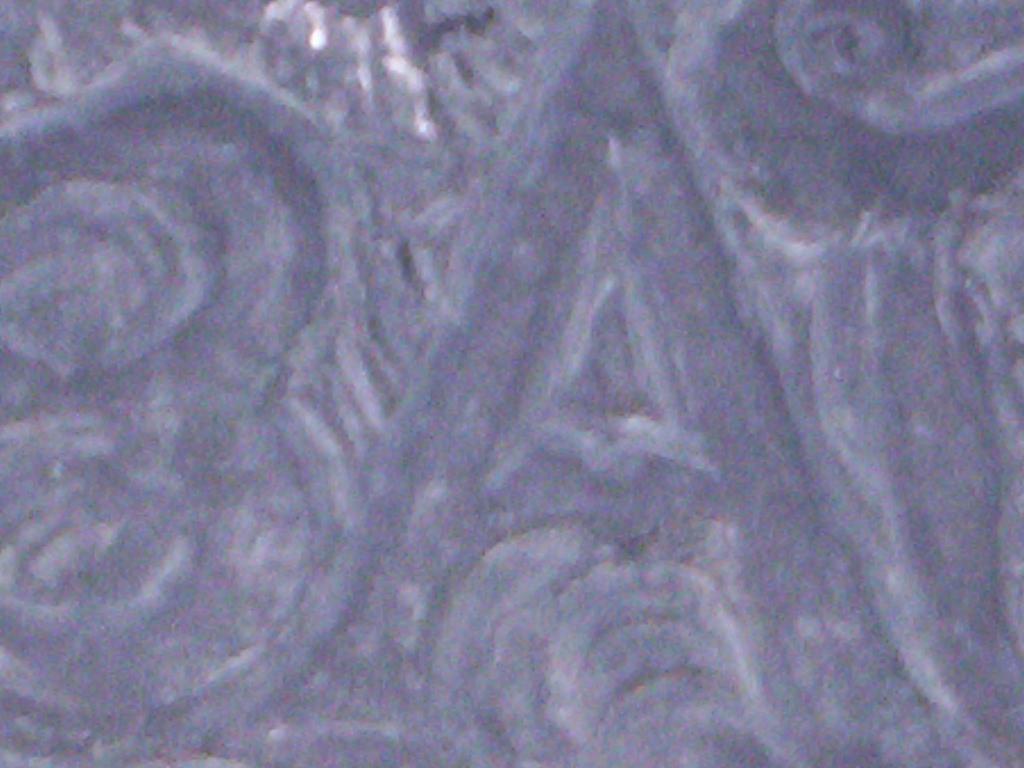
Where in Aberedw will you see the  ''Sign of the A''.
'A' = 'Adfywiad'.
posted by Gethin 'Iestyn' Gruffydd | 8:25 AM

<< Home